


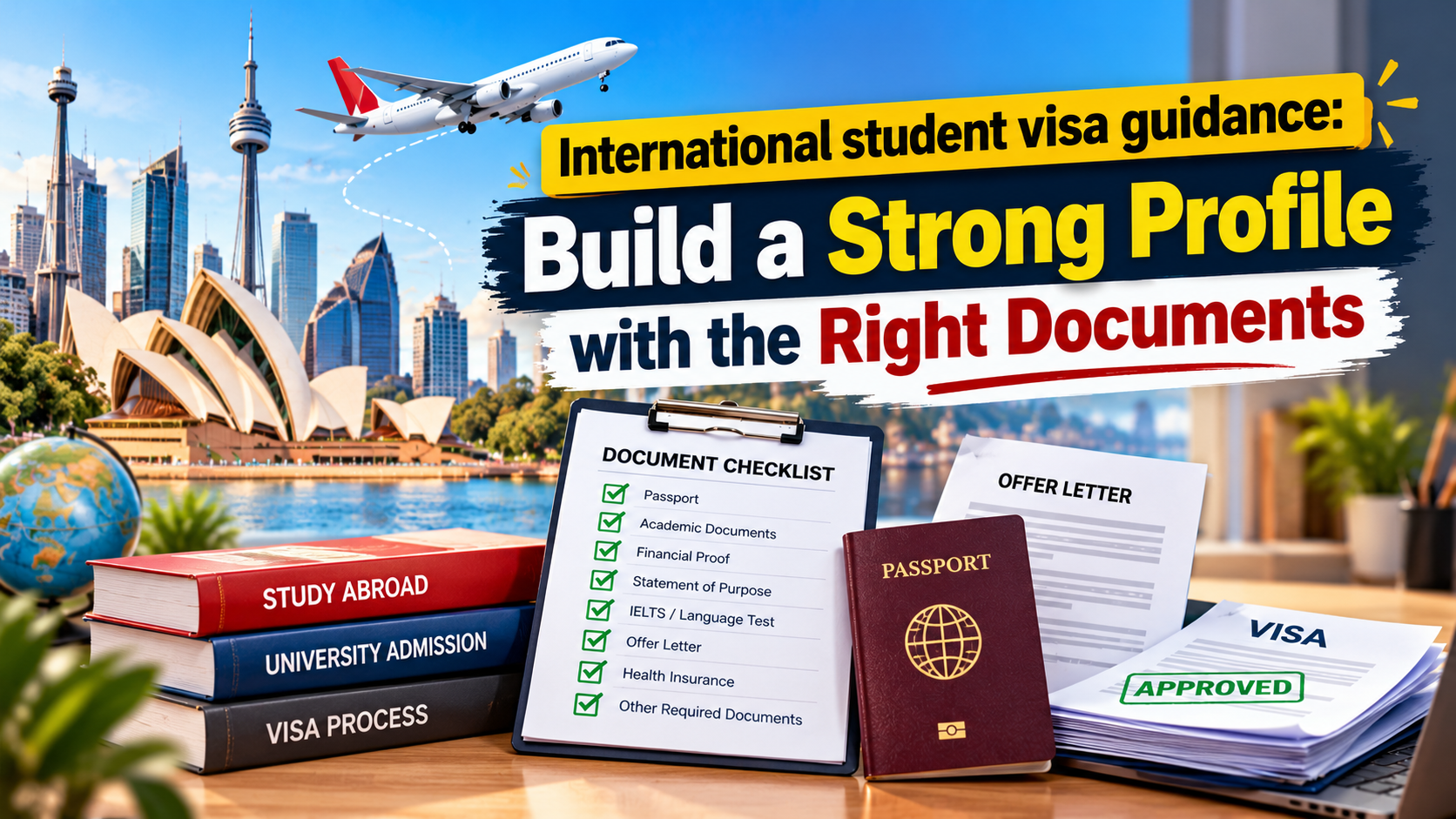
International student visa guidance: Build a Strong Profile with the Right Documents
Every year, thousands of students dream of studying in the USA, UK, Canada or Australia. Many of them have the grades, the ambition and the family support to succeed. Yet some still face rejections, either from universities or at the visa stage, not because they lack potential, but because their applications fail to tell a clear, consistent and convincing story.
That story is built from documents: a resume, a statement of purpose, letters of recommendation, financial papers and visa forms. When these pieces fit together, you look prepared and credible. When they do not, doubts appear. This is why reliable international student visa guidance starts well before you fill in a visa form. In this article, we walk through the key documents, the support you can get for each, and how to keep everything aligned from admission to approval.
Why Documents Matter So Much
University admissions teams and visa officers see thousands of applications. They do not have time to read between the lines, so they rely on what is written and how well it fits together. A strong profile usually shares these qualities:
- Clarity: Your goals, course choice and plans are easy to understand.
- Consistency: Dates, names, achievements and financial details match across every document.
- Authenticity: The tone sounds like you, not like a template.
- Evidence: Claims about achievements, experience and funds are backed by proof.
- Relevance: Everything you include supports your reason for studying that course in that country.
Weakness in any area can raise questions. Good guidance helps you spot and fix those gaps early.
Step 1: A Resume That Works for Global Applications
Your resume is often the first document an admissions officer or recruiter reads. It should present your academics, experience, projects, skills and achievements in a clean, concise format. Many international applications also use applicant tracking systems that scan resumes for relevant keywords, so structure and wording matter.
Working with professional resume builders can help you:
- Choose a format suited to the country and purpose, whether admission, internship or job search
- Highlight measurable achievements instead of listing duties
- Use clear headings and language that systems and humans can read easily
- Avoid common errors such as inconsistent dates, long paragraphs or irrelevant details
- Keep your resume aligned with your statement of purpose and LinkedIn profile
If you are unsure how to present limited experience, a counsellor can show you how to use academic projects, volunteering, internships and leadership roles to build a strong picture. Mentora Bridge offers dedicated resume building and LinkedIn support so that your professional presence is consistent everywhere an officer or recruiter might look.
Step 2: A Statement of Purpose That Tells Your Story
The statement of purpose, or SOP, is your chance to explain who you are, why you chose your field, why you picked a particular programme and where you plan to go next. It is also the document you are most likely to be questioned about later, in an admission interview or a visa appointment.
Experienced SOP writers for study abroad help you create a document that is structured, personal and persuasive. A strong SOP usually:
- Opens with a genuine, specific hook rather than a generic quote
- Connects your academic background to your chosen course
- Shows relevant experience, projects or achievements
- Explains why this university and country fit your goals
- Describes realistic plans after graduation
- Ends with a confident, honest conclusion
A good writer will interview you about your journey, ask probing questions and shape your answers into a coherent narrative, rather than replacing your voice with someone else’s. Be careful with firms that offer recycled or plagiarised templates, since duplicated content can harm your application and your credibility. You can learn about Mentora Bridge’s Statement of Purpose service if you want to see how a structured process looks.
Step 3: Strong Letters of Recommendation
Letters of recommendation give universities an outside view of your abilities, character and potential. They carry weight because they come from people who have taught, supervised or worked with you.
Quality LOR help for universities covers several areas:
- Choosing the right recommenders: Professors, supervisors or mentors who know your work well
- Briefing your recommenders: Sharing your resume, goals and key achievements so they can write specific examples
- Structuring the letter: Ensuring it covers the relationship, strengths, examples and a clear endorsement
- Meeting deadlines: Coordinating submissions through university portals
Generic letters that simply praise a student without examples rarely stand out. Specific stories about projects, leadership or improvement are far more convincing. Mentora Bridge supports students through its Letter of Recommendation service so that this important piece of the puzzle is handled thoughtfully.
Step 4: Financial Documents and Proof of Funds
Visa officers want to know that you can afford your studies and living costs without breaking the rules of your visa. Typical financial evidence includes bank statements, sponsor letters, income documents, education loan sanction letters and scholarship confirmations.
Keep these points in mind:
- Funds should be clearly documented and come from legitimate, traceable sources
- Sponsor relationships should be explained and supported by papers
- Large, unexplained deposits can create doubts
- The amount shown should match the estimated cost in your admission documents
A consultant can help you organise the evidence in a logical order, spot gaps and prepare clear explanations where needed.
Step 5: The Visa Application and Interview
Once you hold an offer letter, the focus shifts to the visa itself. Requirements differ by country, but reliable international student visa guidance generally covers:
- Eligibility check: Confirming that your course, institution and profile meet the rules
- Form preparation: Completing applications accurately and consistently with your other documents
- Document checklist: Assembling passports, admission letters, financial papers, test scores and any other required items
- Appointment and biometrics: Booking slots and preparing for each step
- Interview readiness: Practising honest, clear answers about your course, university, funding and plans
- Post-decision guidance: Planning next steps after approval, or understanding options if there is a refusal
If you are targeting the United States, you can explore Mentora Bridge’s USA study visa page, and for the United Kingdom, the Study in the UK page gives an overview of support available.
How to Keep Your Whole Profile Consistent
Before you submit anything, run a final consistency check. Compare your resume, SOP, recommendation letters, application forms, financial documents and visa forms side by side, and ask yourself:
- Do dates of education and work match everywhere?
- Are course names, university names and spellings identical?
- Does the story in the SOP match what the resume and LOR show?
- Do the funds listed support the costs mentioned in your admission papers?
- Can you explain every statement confidently in your own words?
This step alone can prevent many avoidable problems.
Red Flags When Choosing Support
Not every service provider works ethically. Watch out for:
- Guaranteed outcomes: No one can promise admission, scholarships or a visa.
- Copy-paste documents: Templates reused for many students reduce originality.
- Fake or inflated claims: Fabricated experience, certificates or funds can lead to bans.
- No personal interaction: If nobody asks about your background, the advice will be generic.
- Unclear pricing: Ask for a full written list of services and fees.
A trustworthy consultant will tell you what is realistic and will refuse to include anything false in your application.
How Mentora Bridge Supports International Applicants
Mentora Bridge is a Chandigarh-based consultancy that brings together career counselling, document writing and visa guidance for students heading abroad. The team combines mentorship with practical support, from psychometric assessment and career counselling services to resumes, SOPs, essays, recommendation letters and visa preparation.
Students benefit from a structured journey:
- Discover: Identify strengths, interests and a suitable pathway through counselling and assessment.
- Build: Create strong documents, including resume, SOP and recommendation letters.
- Apply: Prepare university applications and visa paperwork with care.
- Prepare: Practise for interviews and understand what to expect.
- Depart: Plan the transition to life abroad with confidence.
Having one team guide every stage helps maintain consistency, which is often the difference between a hesitant application and a convincing one.
A Realistic Timeline
Starting early gives you room for revisions and reduces stress. As a rough guide:
- Eight to twelve months before intake: Begin counselling, shortlist courses and start your resume and SOP drafts.
- Six to eight months before intake: Request letters of recommendation and finalise application documents.
- Four to six months before intake: Submit applications and monitor decisions.
- Two to four months before intake: Prepare financial documents, apply for the visa and practise for interviews.
- One to two months before intake: Finalise travel, housing and pre-departure planning.
Timelines vary by country and university, so always check specific deadlines.
Final Thoughts
A successful study abroad journey is built on preparation, honesty and attention to detail. From professional resume builders to experienced SOP writers for study abroad and thoughtful LOR help for universities, each piece of support strengthens your profile. When these documents work together with dependable international student visa guidance, you present yourself as a focused, credible and well-prepared applicant.
Ready to build your application the right way? Visit the Mentora Bridge website or contact the team to book a consultation. You can also call +91 7719634441 or email support@mentorabridge.com.

 Mentora Bridge empowers students and professionals with expert mentorship, global education guidance, and career-focused support to help them confidently take the next step toward their future.
Add a comment