


US B1/B2 Visa Documents Required: A Practical Checklist for Indian Applicants (2026)
By Mentora Bridge | Visa and career consultants, Chandigarh & Mohali
Most first-time applicants walk into the US visa process thinking they need a thick file with every paper they have ever owned. They don’t. Consular officers talk to hundreds of people a day, and your interview often lasts just a few minutes. What matters is that you carry the right documents, that they match what you wrote in your application, and that your story makes sense.
This guide breaks the US B1/B2 visa documents required into two simple parts: what you must have in hand, and what you can bring to back up your case. Rules and fees change often, so we have linked the official sources wherever it counts.
What the B1/B2 visa actually covers
The B1 is for short business trips like meetings, conferences and contract talks. The B2 is for tourism, visiting family and friends, or medical treatment. Most Indian applicants get a combined B1/B2 visa. Whichever you get, you cannot take up a job in the US on it, and you cannot study there long term. The State Department explains the visitor category on its official visitor visa page.
Documents you must carry (no exceptions)
Think of this as your main folder. If something here is missing, the day can end before it begins.
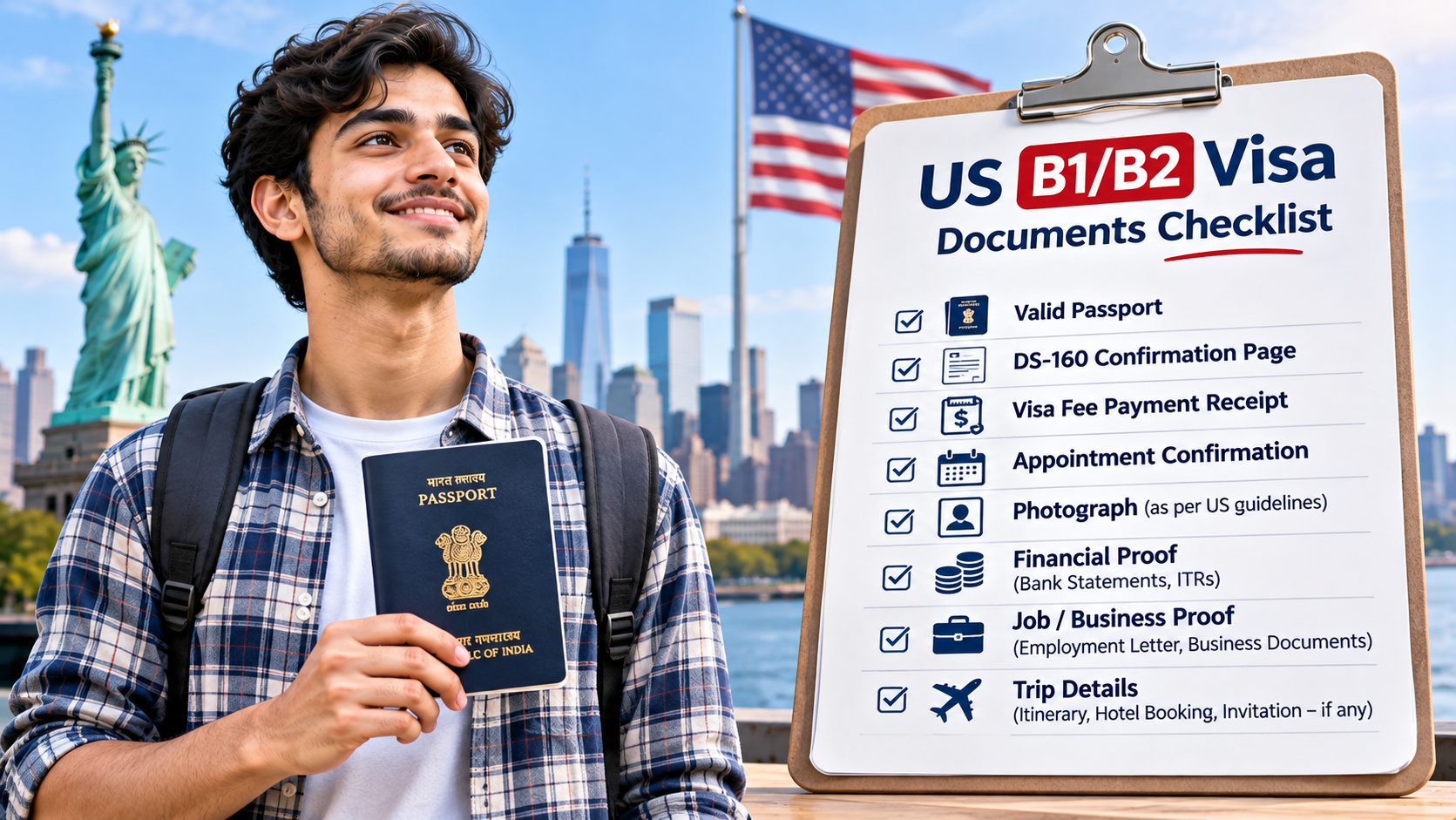
- Valid passport. Check the expiry date now, not a week before your appointment. If you have held older passports with US visas or visit stamps, take those too.
- DS-160 confirmation page. You fill the DS-160 online at the official CEAC website. After submitting, print the confirmation page that has the barcode and your application ID. Keep a soft copy as well, but the printout is what gets scanned.
- Visa fee payment receipt. The fee for most visitor visas is $185, and it is non-refundable even if the visa is refused.
- Appointment confirmation. This is the letter or page you receive after booking your slot.
- Photograph. Your photo is uploaded with the DS-160, but if that upload failed or you were asked to bring one, it must follow the official size and background rules. Read the State Department photo requirements before getting one clicked.
A small tip from our desk: keep these five in a separate transparent folder, on top. When the officer asks for something, you should never have to dig.
Supporting documents that strengthen your case
None of these is officially mandatory, and the officer may not ask for any of them. Still, a visitor visa is decided on two things: why you are going, and why you will come back. These papers help you answer both.
Proof of funds
- Last 6 months of bank statements
- Income tax returns for the last 2 to 3 years
- Salary slips or business income proof
There is no official minimum bank balance for a B1/B2 visa. What counts is that your funds are believable for the trip you describe. A sudden big deposit a few weeks before the interview raises more questions than it answers.
Proof of job or business
- Employment letter with your designation, salary and approved leave
- Business registration, GST certificate or company papers if you are self-employed
- Student ID and bonafide certificate if you are still studying
Proof of ties to India
- Property papers
- Documents showing close family in India, such as marriage certificate or children’s birth certificates
- Anything else that shows your life is rooted here
Trip details
- A rough itinerary
- Hotel bookings if you have made them
- For a business trip, an invitation letter or meeting details from the US company
- For a family visit, host’s address and status in the US
One more thing. Do not book non-refundable flights before you have the visa in your passport. Even the State Department warns that there is no guarantee of approval.
What you do not need
You do not need an affidavit of support for a normal tourist visa, and an invitation letter is not compulsory either. It can help when you are visiting relatives, but it will not replace your own ties and finances. Also, in most cases you bring supporting papers on the interview day instead of mailing them in advance.
A quick word on fees and rule changes
The standard visa application fee is $185. On top of that, a new Visa Integrity Fee of $250 was introduced under a US law passed in 2025, and several news reports have covered how it affects Indian applicants. Since the rollout details have been moving, please confirm the current amount and how to pay it on the official State Department site before you make any payment.
Interview rules have also tightened. Since September 2025, most applicants need an in-person interview, and the interview waiver (dropbox) is limited to a narrow group of renewals. Appointment waiting times differ a lot from one city to another, so check the official wait times page for Delhi, Mumbai, Chennai, Hyderabad and Kolkata and plan early.
Interview tips that actually help
- Know your own DS-160. Whatever you wrote there, you will be asked about it. A mismatch is a bigger problem than a weak answer.
- Keep answers short and direct. If the officer asks where you are going, say where, for how long and why. Skip the life story.
- Be clear about your return. Mention your job, your family, your plans after the trip. Say it naturally, not like a rehearsed speech.
- Never submit fake or edited documents. A fake bank statement can lead to a permanent ineligibility. Real, modest papers always beat impressive forged ones.
- Do not carry unrelated papers. Share only what the officer asks for. Handing over a pile makes you look nervous.
Common mistakes that lead to refusal
- Passport details or travel history that don’t match the DS-160
- Unclear purpose of travel
- Funds that do not match the trip or the declared income
- No visible reason to return to India
- Applying again right after a refusal without anything new to show
If you have been refused before, fix the actual gap first. Re-applying with the same file rarely changes the outcome.
Final checklist before you leave home
- Passport (and old passports)
- DS-160 confirmation page with barcode
- Fee receipt
- Appointment confirmation
- Photograph, if required
- Bank statements and ITRs
- Employment or business proof
- Property or family documents
- Itinerary or invitation, if relevant
Need a hand with your US visa file?
Sorting out documents, filling the DS-160 correctly and preparing for the interview is where most people get stuck. At Mentora Bridge, we guide applicants step by step through the process, from checking your paperwork to mock interview practice. You can read about our USA tourist visa services or contact our team for a one-on-one discussion.
Planning a trip beyond the US? We also help with the Canada tourist visa, UK tourist visa and Dubai tourist visa. More guides are on our blog.
Frequently asked questions
Is there a minimum bank balance for a US tourist visa? No official figure exists. The officer looks at whether your funds fit your trip and your income.
Do I need to show a return ticket or hotel booking? Not mandatory. A rough plan helps, but avoid paying for non-refundable bookings before approval.
Can I submit documents before the interview? Generally you carry them to the interview. Follow the instructions in your appointment confirmation.
Can I work on a B1/B2 visa? No. It allows short business activities and tourism, not employment.
Do I need an invitation letter? No, it is not compulsory. It can support a family visit but is not a substitute for your own ties and funds.
Disclaimer: Visa rules, fees and procedures are set by the US Department of State and can change without notice. Always confirm the latest details on travel.state.gov. This article is general guidance and not legal advice.

 Mentora Bridge empowers students and professionals with expert mentorship, global education guidance, and career-focused support to help them confidently take the next step toward their future.
Add a comment